













Quick Summary: Owning a pet during retirement provides vital physical, emotional, and cognitive health benefits for older adults. Caring for a dog or cat encourages daily physical movement, lowers blood pressure, and reduces feelings of late-life isolation. Discover how pet-friendly senior living communities help residents maintain deep companionship with their furry family members.
As the old saying goes, dogs are “man’s best friend.” It’s common knowledge that dogs—and other pets—are faithful companions. The affection that our pets provide can certainly put a smile on our faces. Research has found these benefits extend far beyond friendship.
Studies show numerous benefits of pet ownership for seniors across multiple dimensions of wellness, from improved heart health to a greater sense of purpose and more opportunities for social connection.
At The Farms at Bailey Station, we believe that wellness extends beyond staying fit. The Farms provides a lifestyle that supports mental and physical wellness by keeping residents engaged, connected, and fulfilled across all dimensions of wellness. A lovable animal friend is a wonderful way to bring companionship and joy to your life, which is why we’re proud to be a pet-friendly senior living community.
For all older adults and their furry, feathered, or scaly friends, here’s a look at how pet ownership benefits physical, emotional, and social well-being.
What are the 8 Dimensions of Wellness?
At any age, there’s more to your overall health than just staying fit and eating right. Your ability to manage stress, adapt to change, and express your feelings can impact your physical health. Similarly, unhealthy habits, like not getting enough sleep or exercise, can affect your mood, energy, and self-esteem.
The eight dimensions of wellness model looks at these factors in a holistic, interconnected way to get a complete picture of your overall health. Originally developed by Dr. Peggy Swarbrick as a way to describe disparities faced by people with mental health and substance abuse issues, the eight dimensions of wellness model has been broadly adopted across healthcare systems, workplaces, and universities.
Eight dimensions of wellness
- Emotional Wellness: how well you recognize and manage feelings, cope with stress, and your level of resilience
- Environmental Wellness: whether your surroundings provide a safe, pleasant, and stimulating atmosphere
- Financial Wellness: your sense of security and control over your resources
- Intellectual Wellness: your sense of curiosity, how much you engage in lifelong learning, your creative expression, and your level of mental stimulation
- Occupational Wellness: having meaningful work or something that gives you a sense of accomplishment (or, in retirement, volunteering, mentoring, hobbies, or community service)
- Physical Wellness: your level of activity, nutrition, quality sleep, and access to healthcare
- Social Wellness: your sense of belonging and connection, as well as the strength of your support network
- Spiritual Wellness: whether you have a sense of purpose or meaning, however you define it
This holistic model is valuable because it ensures we consider all the factors that can affect our overall quality of life. Additionally, these dimensions interact with one another, meaning a single activity may benefit multiple areas at once. Unlike many societal definitions of “wellness,” this definition reimagines success by emphasizing balance over chasing unrealistic standards of perfection.
Interestingly, the benefits of pet ownership touch several of these areas at once.
Pets and Emotional Wellness
For older adults, one of the greatest potential risks to their health is feeling lonely or isolated. Numerous leading health organizations, including the American Heart Association, AARP, and former Surgeon General Vivek Murthy, have addressed the serious health consequences of loneliness. Social isolation and loneliness can increase a person’s risk for both physical and mental conditions, including heart disease and stroke, Type 2 diabetes, depression and anxiety, self-harm, and dementia, according to the CDC.
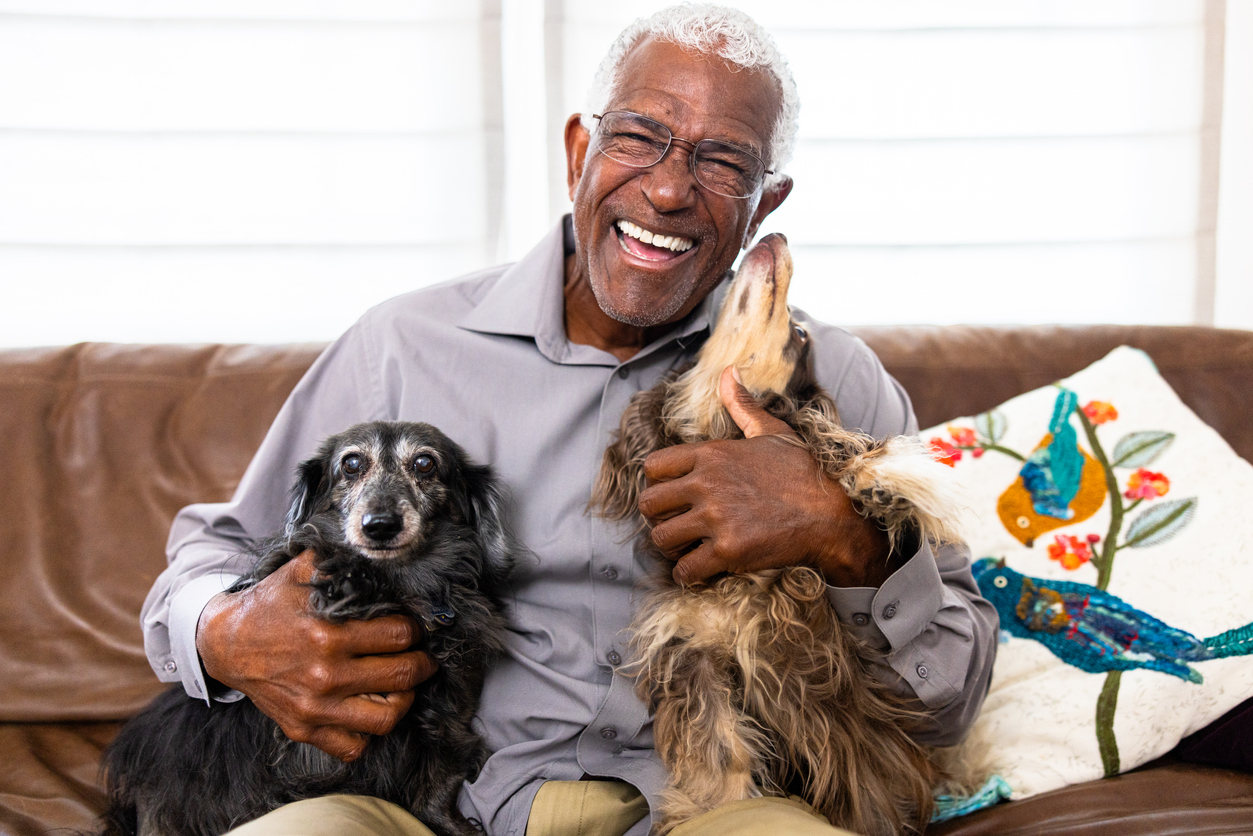
Older adults who own pets say that having a pet has a highly positive impact on their mental and emotional wellness. Adults age 50 and older reported a number of positive benefits of pet ownership in The University of Michigan’s 2025 National Poll on Healthy Aging:
- 83% said having a pet helps give them a sense of purpose.
- 71% said having a pet helps them enjoy life.
- 64% said having a pet makes them feel loved.
- 63% said having a pet helps them reduce stress.
- 35% said having a pet helps them cope with emotional issues.
Recent scientific research has proven that cuddling with a furry friend does more than just put a smile on our face. A 2022 review of nearly 130 studies found that human-dog interactions create physiological reactions in our bodies, increasing heart rate and oxytocin (the “love hormone”) and decreasing cortisol (the hormone that helps us regulate stress).
At The Farms, our mission is to provide the most relaxing, rewarding senior living experience possible. Our maintenance-free independent living residences enable residents to maintain their independence and freedom while lowering their stress levels as we handle the maintenance, cooking, and cleaning. All of our amenities are designed to help you optimize your mental and emotional well-being.
Pets and Social Wellness
Having a pet is a natural antidote to isolation, providing both direct companionship and an easy conversation starter that encourages more social interaction. You’ll have something to talk about, pictures to share, and a reason to invite friends over for a visit. Plus, interacting with other dog owners on walks or at the park is a great way to foster friendships.
Researchers who studied how people form social connections found that pets were the third most common way to meet neighbors. Additionally, pet owners were 60% more likely to get to know people they hadn’t met before. Dog owners in particular were far more likely to befriend someone they met through their pet.
The University of Michigan poll confirmed these results. 70% of adults over 50 said having a pet helps them connect with others.
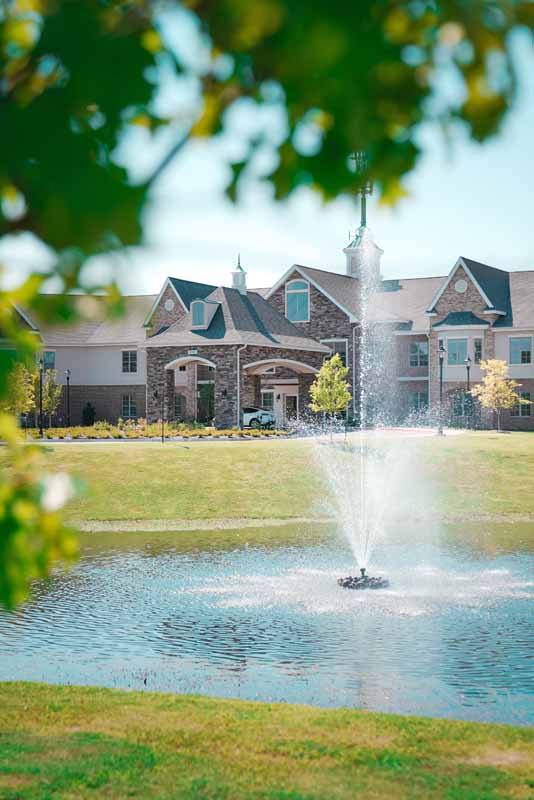
Senior living communities like The Farms are another way older adults can connect with others and benefit from regular social interaction. In fact, The Meadows neighborhood at The Farms was thoughtfully designed in a welcoming layout surrounding beautiful Lake Christie, encouraging strong bonds and lasting friendships. The neighborhood also features Chimney Park, a central gathering space designed for dinner parties, and cookouts. Taking your pet for a stroll alongside Lake Christie is also a great way to connect with new people.
Pets and Physical Wellness
For dog owners, one benefit of pet ownership is immediately clear—so clear they can’t even say the word out loud.
You guessed it: all those w-a-l-k-s that your pup loves so much are proof that pet ownership helps older adults stay active.
According to the University of Michigan poll, 44% of adults over age 50 say having a pet helps them stay physically active. 44% also said that having a pet helps them stick to a daily routine. Having an “accountability partner” to encourage you to get moving makes any fitness goal easier, especially when those big eyes are staring up at you and their tail is wagging happily.
Studies have shown that pet ownership not only fills your heart with joy, but also keeps your heart healthy.
How Pet Ownership Can Help Improve Heart Health for Seniors
- Lower blood pressure: Multiple studies have shown pet ownership can help lower blood pressure. One study of patients with borderline hypertension found that adopting a dog significantly lowered systolic blood pressure. Other results indicate having pets can reduce the risk of developing hypertension as well.
- Lower risk of cardiovascular disease: A review of research conducted by the American Heart Association found multiple studies associating pet ownership with reduced risk for cardiovascular disease and increased survival rates in individuals with established cardiovascular disease. Other studies have found that owning a cat is associated with reduced mortality risk from cardiovascular disease, in particular, stroke.
- Improved longevity after cardiovascular events: Among those who have experienced a heart attack or stroke, dog owners had a 33% higher rate of survival in the 12 years following a heart attack and a 27% higher rate of survival following a stroke.
Another way to support heart health for seniors is to build consistent habits that protect cardiovascular function. The Farms works to integrate habits like these throughout all aspects of our independent living lifestyle. Our Athletic Club offers dedicated fitness consultants and high-tech equipment to support your active lifestyle and meet your fitness goals. We offer multiple dining options, all prepared with fresh, local ingredients. Throughout our community, we offer multiple ways to connect and socialize. Life at The Farms helps nourish your mind, body, and spirit.
How Living at the Farms Helps Improve Wellness
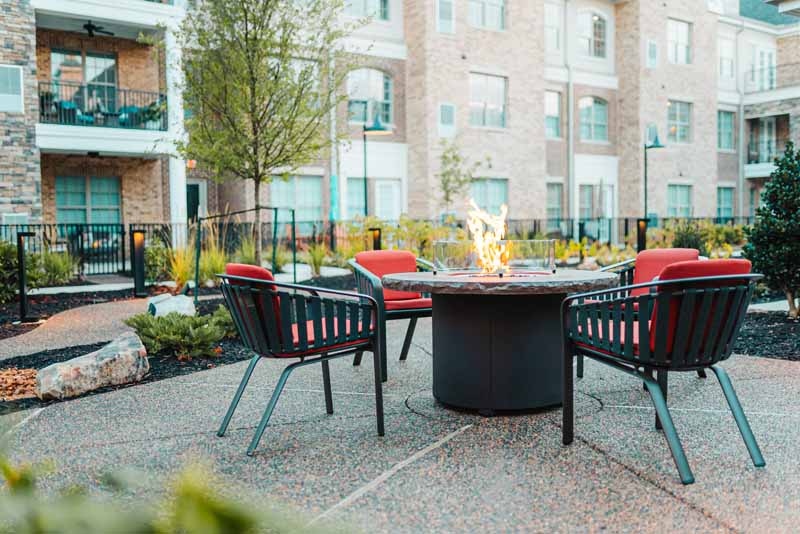
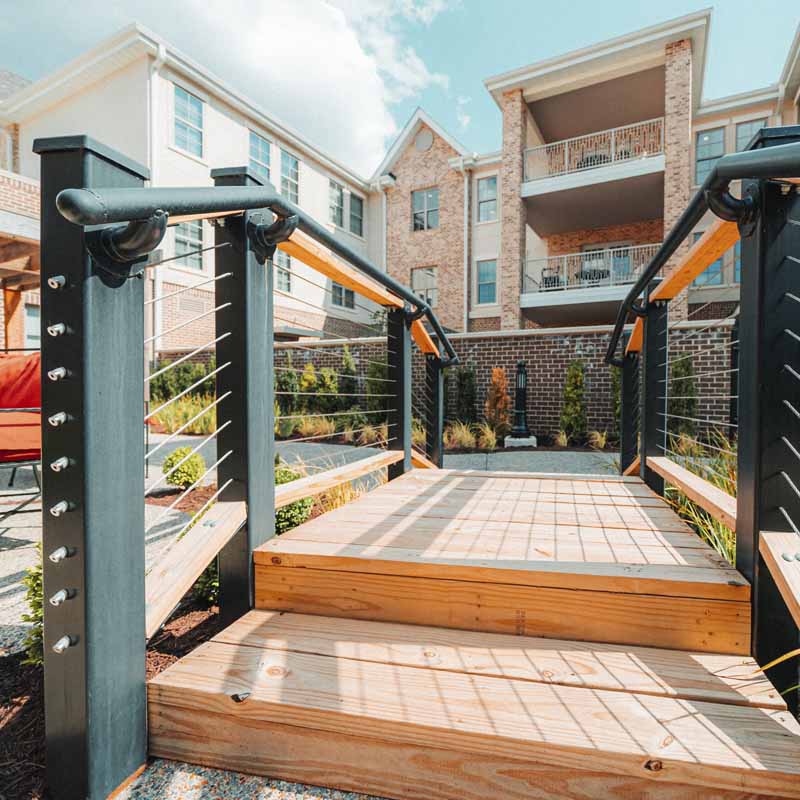
Having a safe, pleasant, stimulating atmosphere is essential for good environmental wellness. The Farms provides residents with a positive, healthy, and engaging environment, featuring beautiful design, stunning landscaping, outdoor gathering spaces, a high-quality fitness center, and outstanding dining options. Plus, as a pet-friendly senior living community, residents at The Farms can enjoy all of the ways pet ownership benefits their emotional, social, and physical well-being.
Wellness is more than just doing the right things and being disciplined. It’s a full picture of your quality of life: your level of engagement, your community, and your sense of purpose. And the full picture isn’t complete without companionship, from four-legged family members to lifelong human friends and neighbors. At The Farms, you can enjoy a relaxing, stress-free, and engaging lifestyle in a place where you truly belong.
If you’re ready to explore how The Farms at Bailey Station can help you–and your pets–lead a more fulfilling life, contact us today to schedule a visit.
Frequently Asked Questions
Q: What are some of the benefits of pet ownership for older adults
A: For older adults, the benefits of pet ownership extend across multiple dimensions of wellness:
- Pet ownership can help older adults feel a greater sense of purpose.
- Having a pet, especially a dog, encourages more physical activity.
- Pet ownership has been shown to have positive effects on heart health for seniors.
- Pet owners are more likely to connect and befriend people in their community because pets create opportunities for social interaction.
Q: Is The Farms at Bailey Station a pet-friendly senior living community?
A: Absolutely! The Farms at Bailey Station emphasizes mental and physical wellness for our residents. Pets offer a wide variety of health benefits across multiple dimensions of wellness, which is why we’re proud to be a pet-friendly senior living community.
Q: How does pet ownership benefit heart health for seniors?
A: Pet ownership benefits heart health for seniors in a number of ways. Studies have shown:
- Pet ownership and interaction with animals can lower blood pressure and reduce the risk of developing hypertension.
- Researchers have also noted that pet ownership is associated with a lower risk of cardiovascular disease, as well as an improved rate of survival for individuals with established cardiovascular disease.
- Among individuals who have experienced a heart attack or a stroke, those who owned pets had a higher long-term survival rate for both heart attacks and strokes after 12 years.